
 By
By 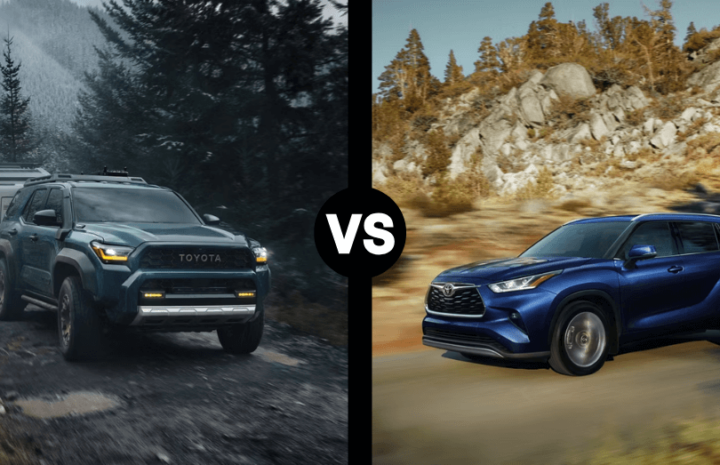
Walk into any Toyota showroom and you’ll see two three-row SUVs that look similar on paper but couldn’t be more different in practice. The Highlander and 4Runner both measure exactly 194.9 inches long, yet they’re built for completely separate purposes. One hauls families around town efficiently with a smooth ride. The other climbs mountains and forges rivers on weekends. Here’s how to figure out which one belongs in your garage.
- The Highlander rides on a car-based platform for smooth daily driving, while the 4Runner uses body-on-frame construction built for serious off-road punishment.
- Fuel economy splits dramatically: Highlander hybrids achieve up to 36 mpg city versus the 4Runner’s truck-like 16 city and 19 highway ratings.
- The 4Runner holds value better with 32% depreciation over five years compared to the Highlander’s 41%, but costs roughly $10,000 more in fuel over that same period.
Two Different Ways to Build an SUV
The construction method tells you everything. Toyota built the Highlander on a unibody platform, which means the body and frame form one piece like a car. This setup delivers a quieter, smoother ride on pavement and better handling around corners. The 4Runner sits on a separate frame with the body bolted on top, just like a pickup truck. This body-on-frame design can take serious abuse on trails but feels less refined on regular roads.
Drive them back to back and the difference becomes obvious within minutes. The Highlander glides over bumps and stays quiet at highway speeds. The 4Runner feels more substantial but also heavier through turns, with more body roll when you change lanes.
Power and Efficiency Trade-Offs
Both offer 2.4-liter turbocharged engines, but the 4Runner squeezes out more power at 278 horsepower and 317 pound-feet of torque compared to the Highlander’s 265 horses and 310 pound-feet. The 4Runner also tows more, maxing out at 6,000 pounds versus 5,000 for the Highlander.
The hybrid versions tell different stories. The Highlander hybrid uses a 2.5-liter four-cylinder paired with electric motors for 243 combined horsepower and stellar fuel economy. The 4Runner’s i-Force Max hybrid keeps the 2.4-liter turbo setup for 326 horsepower but only manages 23 mpg combined.
Here’s where your wallet comes in. The Highlander hybrid can hit 36 mpg in city driving, which saves you thousands at the pump. Over five years, you’ll spend about $6,600 on gas for a Highlander versus $10,045 for a 4Runner. That’s a $3,445 difference that could cover a nice vacation.
Seating Space Gets Complicated
Every Highlander seats seven or eight people depending on whether you choose second-row captain’s chairs or a bench. The 4Runner comes with five seats standard, but you can add a third row on SR5 and Limited trims for an extra $770.
Here’s the twist: the 4Runner’s optional third row actually offers more legroom at 31.8 inches compared to the Highlander’s cramped 28 inches. Adults can squeeze back there in a 4Runner for short trips. In a Highlander, that third row works best for kids or teenagers. The Highlander makes up ground with a more spacious second row where most passengers actually sit.
Cargo space? The Highlander gives you 16 cubic feet behind all three rows versus just 12.1 in the 4Runner. Drop those third rows and both offer around 48 cubic feet, which fits plenty of groceries or sports equipment.
Off-Road Capability Isn’t Even Close
The Highlander sits eight inches off the ground across all trims. That’s enough for gravel roads and light trails but nothing serious. The 4Runner reaches 10.1 inches of ground clearance in TRD Pro and Trailhunter trims, with approach and departure angles of 33/24 degrees. Those numbers mean you can crawl over rocks and logs that would scrape the Highlander’s bumpers.
The 4Runner also gets proper four-wheel drive with multi-terrain select and crawl control. The Highlander offers all-wheel drive, which helps in snow and rain but won’t save you on a rocky trail. If you actually plan to go off-roading regularly, the 4Runner is the only real choice here.
Money Matters Beyond the Sticker
The 4Runner starts at $41,570 while the Highlander begins at $40,320. That looks close until you add features. Top-trim 4Runners reach $67,900 with off-road packages, while loaded Highlanders stop at $54,675.
Resale value swings the other direction. The 4Runner holds 68% of its value after five years compared to 59% for the Highlander. Buy a base 4Runner SR5 for $41,270 and you might sell it for $28,000 five years later. A base Highlander bought for $40,320 could bring roughly $23,788 at the same point.
Making the Right Pick
Stop by your local toyota dealer to test drive both and the right choice usually becomes clear. Do you drive mostly on pavement, need to haul kids to soccer practice, and care about fuel costs? The Highlander wins. It rides better, costs less to fill up, and has more standard seating.
Planning weekend camping trips, towing a boat regularly, or live somewhere with rough roads? The 4Runner justifies its higher fuel costs with capabilities the Highlander can’t match. It’ll still get you to work every day, just not as smoothly or cheaply. Both deliver Toyota’s reputation for reliability, so you’re choosing between a refined daily driver and a rugged adventure vehicle rather than picking one good SUV over a bad one.
This post may contain affiliate links. Meaning a commission is given should you decide to make a purchase through these links, at no cost to you. All products shown are researched and tested to give an accurate review for you.