
 By
By 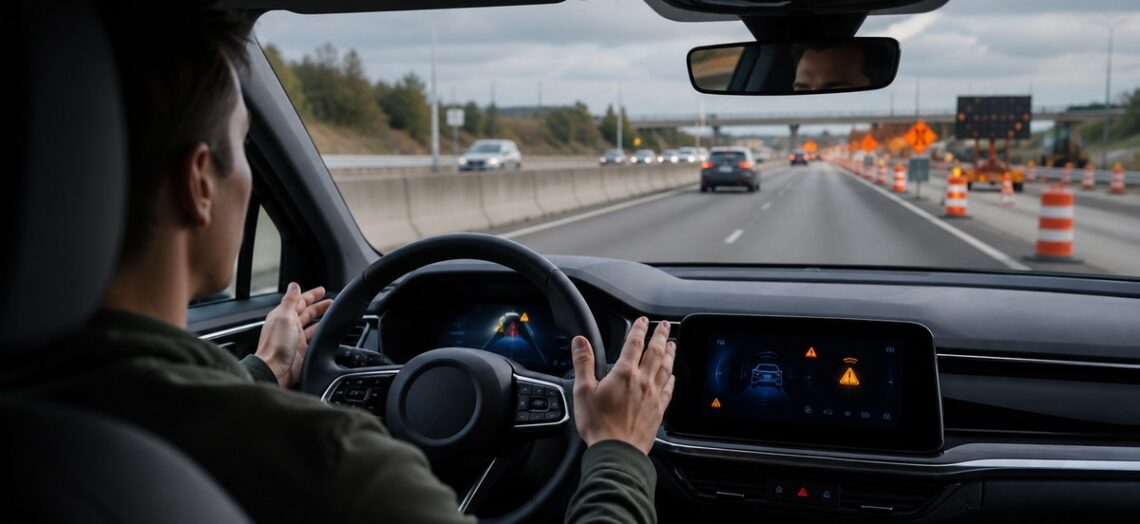
Hands-free highway driving can make a long trip feel lighter, but the car is always watching for the moment it needs you again. Knowing when and why that handoff happens is the difference between a smooth transition and a scary one.
- Partial automation still needs a fully attentive driver ready to steer within seconds.
- Handoffs get triggered by unmapped roads, faded lane lines, construction, and bad weather.
- Alert systems escalate fast, so knowing the sequence helps you react calmly.
Partial Automation Is Not a Chauffeur
The systems marketed as hands-free are a bundle of driver assistance features working together. Adaptive cruise control holds a set speed and slows to keep a safe following distance. Lane centering nudges the steering to keep you in the middle of your lane. Some cars add automated lane changes on top. Handy stuff on a boring stretch of interstate. But none of it makes the car self-driving.
The human is still the backup plan. You have to watch how the technology is performing, keep your eyes on the road, and be ready to grab the wheel the instant something looks off. Safety researchers have been blunt about this. There is little evidence that partial automation actually makes driving safer, and it can add new risks when drivers tune out and treat the car like it can handle everything.
What Actually Triggers the Handoff
Hands-free features do not work everywhere, and that is by design. On the systems that allow true hands-free operation, eligibility depends on pre-mapped roads. Companies like GM build their maps using lidar, GPS, camera, and radar data collected in advance, which is why the feature only unlocks on specific highways that have been surveyed. Drive off that mapped network onto a rural two-lane road or an unmapped route, and the car will ask you to take the wheel.
Lane markings matter too. Lane centering reads the painted lines to know where the lane sits. When those lines fade, split near an exit, or disappear entirely, the system loses its reference and hands control back. Construction zones are a classic trouble spot because temporary striping, shifted lanes, and orange barrels confuse the cameras. Weather adds another layer. Heavy rain, snow, or a low sun glaring into the sensors can all reduce what the car can see, and a system that cannot see clearly will not keep steering for you.
Reading the Alerts Before They Escalate
When the car decides it needs you back, it does not just go quiet. There is a deliberate warning sequence, and independent testing has pushed automakers toward tighter timing. A well-designed system should start a dual-mode alert, something you can both see and hear, within about 10 seconds of noticing your eyes are off the road or your hands are not ready. If you still do not respond, it adds a third type of alert or begins slowing the car by roughly the 20-second mark.
Ford BlueCruise and GM’s hands-free system are among the ones that meet these attention-reminder standards in testing. Consumer Reports has documented how these systems escalate from a gentle chime and dashboard message up to more insistent warnings, and eventually to bringing the vehicle to a controlled stop if the driver never reacts. If a driver ignores the alerts for that long, the car assumes something is genuinely wrong. The strongest systems then send an SOS to a help center and lock out the feature for the rest of the trip.
One quirk researchers have noticed is that drivers quickly learn to game these reminders. People figure out the exact rhythm of the alerts and do the bare minimum to reset them, glancing up just long enough to quiet the warning before looking away again. That habit defeats the whole point, which is keeping your mind engaged, not just your hands.
Take the Wheel Like You Mean It
When a handoff comes, treat it as your job returning, not an interruption. Keep both hands near the wheel even during hands-free stretches so you are never more than a moment from steering. Scan ahead the same way you would while driving manually, because the car centering itself does not mean the road ahead is clear. When an alert fires, take firm control right away rather than nudging the wheel just enough to silence it. And build your own mental map of where the system tends to bail, like merges, construction, and rough weather, so the handback never catches you flat-footed. Used with your full attention, these features can ease a long haul. The trick is staying the driver, not the passenger.
This post may contain affiliate links. Meaning a commission is given should you decide to make a purchase through these links, at no cost to you. All products shown are researched and tested to give an accurate review for you.