
 By
By 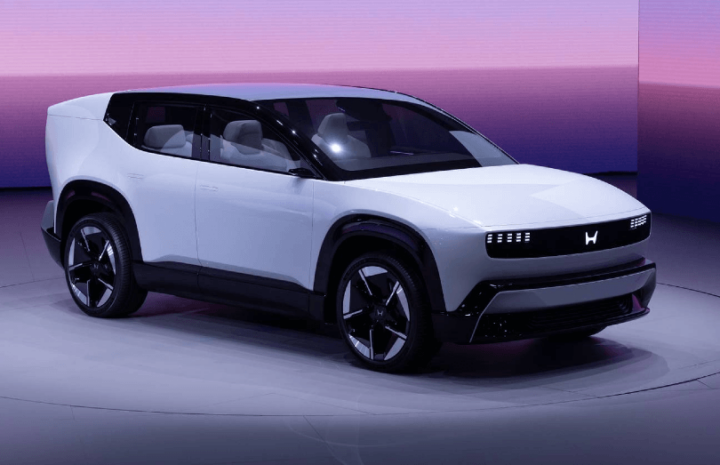
Honda just hit the brakes on three of its most anticipated electric vehicles. The Honda 0 Series SUV, 0 Series Saloon, and the Acura RSX have all been canceled before a single one rolled off the assembly line. The move, announced in March 2026, marks one of the biggest retreats from EV production in the auto industry’s recent history and could cost Honda up to $15.8 billion in total losses.
- All three EVs were reportedly headed to production within weeks, and each was planned around Honda’s in-house “Zero” EV platform.
- Honda warned that global restructuring costs tied to the cancellation could amount to around $15.7 billion, including write-offs, impairment charges, and losses in China.
- The company is expected to shift toward a more gradual electrification approach, focusing on hybrid vehicles in the near term while continuing to develop EV technology.
What Honda Was Building in Ohio
Just a few months ago, Honda was marketing its futuristic 0 Series EVs as the centerpiece of its next-generation strategy, and even invested over $4.4 billion to build an Ohio EV Hub designed to supply its North American electric vehicle production. The 0 Series was supposed to be developed on an all-new dedicated EV platform, designed around a philosophy Honda called “Thin, Light, and Wise.”
The lineup included two Honda-branded models and one from Acura. The 0 Series sedan was a futuristic-looking four-door, while the 0 Series SUV had boxy, Honda Element vibes. The Acura RSX, meanwhile, was a style-focused electric crossover. Early glimpses showed bold styling and a new operating system called ASIMO OS, which would incorporate advanced driver-assistance systems.
These weren’t concepts sitting on a distant drawing board. The retooling of the Ohio facilities was complete, the battery plant in Jeffersonville was ramping, and the supply base had been structured. Honda was that close to actually building these vehicles.
Why Honda Walked Away
Honda attributed the decision to an “extremely challenging earnings situation,” citing shifting market conditions that forced a reevaluation of its entire EV strategy. US tariffs and growing competition in Asia were some of the factors hurting its revenues.
This will mark the company’s first annual loss since it listed on the Tokyo Stock Exchange in 1957. That’s nearly 70 years of profitability wiped out in a single fiscal year. Due to the economic situation, several top executives are returning or reducing their salary by up to 30 percent of their monthly compensation for three months.
In the U.S., the company pointed to the expiration of federal EV incentives and the easing of fuel-efficiency regulations as factors that slowed EV demand. In China, Honda said it lost ground to newer EV manufacturers that used shorter product cycles and strengths in software-focused vehicle technologies.
Honda Isn’t the Only One Retreating
Ford, Hyundai, Kia, GM, Volkswagen, and Stellantis have all slowed EV rollouts and are even scrapping certain projects altogether. Combined with Ford’s $19.5 billion write-down in December and General Motors’ $7.6 billion in EV-related charges, the industry’s collective retreat from battery-electric vehicles now totals roughly $67 billion.
This trend tells a bigger story. The entire auto industry is grappling with slowing adoption rates, policy uncertainty, and stiff competition from Chinese automakers who can bring vehicles to market faster and cheaper.
The Afeela premium electric sedan, developed jointly with Sony, is still proceeding toward production and is expected to launch in the US market in 2026. It does not use the canceled 0 Series platform. Parts of the 0 Series project will live on, too. For some markets like India and parts of Asia, the 0 Series Alpha shown off last year will still reach production and go on sale.
Where Honda Goes From Here
With EV sales growth slowing across the U.S., Honda plans to reassess where it puts its money and double down on hybrids. The company is currently putting the finishing touches on the upcoming Pilot and Passport that will run on a clean-sheet V6 hybrid drivetrain.
Honda is planning to announce a revised mid- to long-term strategy at a press conference scheduled for May of this year. The future of the Ohio EV Hub remains uncertain, though a Honda spokesperson said the company “established a highly flexible manufacturing environment in Ohio capable of building the right products to meet customer demand.”
For fans who were counting the days until the Honda 0 Series hit dealerships, this is a tough pill to swallow. The cars looked great, the tech sounded promising, and production was right around the corner. But in Honda’s view, launching three EVs into a shrinking market with rising costs would have only dug the financial hole deeper. The gamble now is whether hybrids can hold down the fort long enough for the EV market to catch up to the ambitions Honda had to set aside.
This post may contain affiliate links. Meaning a commission is given should you decide to make a purchase through these links, at no cost to you. All products shown are researched and tested to give an accurate review for you.