
 By
By 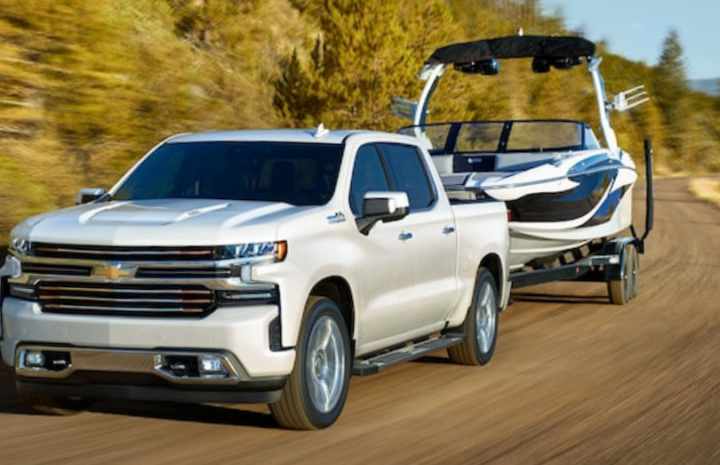
Pulling a trailer doesn’t have to feel like you’re wrestling a mechanical bull down the highway. Whether you’re hauling a camper to the mountains or bringing home a load of lumber, understanding hitch setup, weight ratings, and why your trailer suddenly decides to dance behind you can turn towing from stressful to straightforward.
- Improper weight distribution causes most trailer sway problems, not wind or road conditions.
- GVWR tells you what your truck can weigh fully loaded, while GCWR includes your truck and trailer together.
- The 2026 Silverado features up to 14 camera views, including Transparent Trailer View for conventional and fifth wheel towing.
Weight Ratings That Actually Matter
Walk up to any truck and you’ll find a sticker on the driver’s door jamb plastered with acronyms. GVWR, GCWR, GAWR, it reads like alphabet soup, but these numbers keep you legal and safe. Your truck’s GVWR tells you how heavy it can be with passengers, cargo, and fuel, but no trailer. Towing capacity is different, that’s how much trailer weight you can pull behind you.
Tongue weight is how hard your loaded trailer pushes down on the hitch ball. You want this between 10-15% of your total trailer weight. Too little tongue weight means the trailer acts like a pendulum, swaying at highway speeds. Too much and you’re pushing down on the rear axle, lifting the front end and killing your steering response.
Why Your Trailer Sways and How to Stop It
You’ll feel sway start as a gentle tug, then if conditions are right, it builds into something that makes your heart race. Load placement makes or breaks your towing experience. Pack your trailer with 60% of the weight in front of the axle and 40% behind it. Put heavy gear at the back of your trailer and physics takes over, the tail starts wagging the dog.
Speed amplifies everything. Driving 10 mph slower can cut sway in half. When sway starts, your instinct screams to hit the brakes. Don’t. Braking hard makes things worse. Instead, ease off the gas and let momentum settle things down.
How Chevy, Ford, and Ram Stack Up for 2026
Chevrolet loaded the 2026 Silverado 1500 with camera views that border on excessive, in the best way possible. The truck offers up to 14 different camera views, including Transparent Trailer View which makes your trailer invisible on screen. When you’re backing into a tight campsite, this tech feels like cheating. The Silverado 1500 can tow up to 13,300 pounds when properly equipped with the Duramax 3.0-liter turbo-diesel engine, and Super Cruise hands-free driving works while towing on compatible highways. Across Silverado trim levels, you’ll find varying degrees of this technology, with higher trims packing the full suite of cameras and assists.
Ford counters with Pro Trailer Hitch Assist on the 2026 F-150. The system automatically backs up the truck to line up with the trailer hitch. The 2026 F-150 offers maximum towing of 14,000 pounds when properly equipped with the 3.5-liter EcoBoost V6. Pro Trailer Backup Assist lets you steer the trailer with a simple knob on the dash, and Onboard Scales with Smart Hitch estimate tongue weight in real time.
Ram’s 2026 1500 brings the Hurricane inline-six engine with the HEMI V8 rejoining the lineup after customer demand. The standard output Hurricane makes 420 hp with best-in-class towing up to 11,610 pounds. The 2026 model adds Trailer Reverse Steering Control that lets you turn a dedicated knob in the direction you want the trailer to go while the truck handles steering. Ram also offers Trailer Auto Hitch Assist, which steers the truck into alignment with your trailer tongue while you control brakes and throttle.
Getting Your Setup Right From the Start
Weight distribution hitches aren’t optional when you’re pulling serious weight. These hitches transfer tongue weight to the front axle, keeping everything level and stable. Check your tire pressure before every trip. Make sure your safety chains cross under the tongue. Perform a tug test by applying trailer brakes only and trying to pull away, this confirms the brakes work before hitting the road.
Don’t assume your truck can pull what the brochure claims. Experts suggest keeping your fully loaded trailer at 85% of tow capacity or less. That buffer gives you room for passengers, gear, and real-world conditions that brochures don’t account for.
Should You Buy Based on Towing Specs Alone?
Slow down and give yourself space. Leave earlier, arrive calmer. Modern trucks from Chevy, Ford, and Ram pack enough technology to make towing easier than ever, but cameras and sensors can’t replace common sense. Load your trailer properly, respect your weight limits, and understand the trip might take longer when pulling weight. With proper hitch setup and correct weight distribution, you can tow confidently without the stress.
This post may contain affiliate links. Meaning a commission is given should you decide to make a purchase through these links, at no cost to you. All products shown are researched and tested to give an accurate review for you.