
 By
By 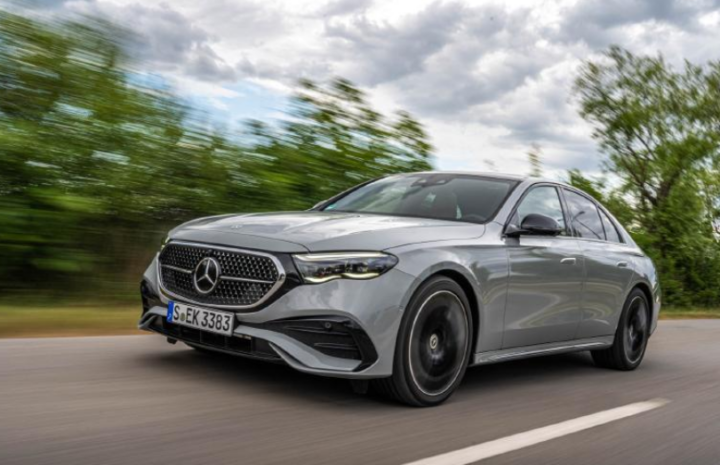
Walk through any upscale neighborhood and you’ll spot them parked side by side – the Mercedes E-Class and BMW 5 Series. These two German luxury sedans have been going head-to-head for decades, and the 2024 models continue this friendly rivalry with fresh looks, impressive tech, and the kind of refinement that makes your daily commute feel special.
- BMW delivers better gas mileage at 28 city/35 highway MPG versus Mercedes at 25 city/33 highway MPG – that’s real money saved at the pump
- Mercedes brings its wild Superscreen setup with three displays including one just for your passenger, while BMW keeps things simpler with two curved screens
- Both base engines pump out 255 horsepower, though BMW’s six-cylinder option gets you to 60 mph in 4.4 seconds flat
First Look – Style That Turns Heads
Pull up to the valet stand in either sedan and you’ll get approving nods. BMW has dialed back the drama with its kidney grille – thankfully avoiding those giant nostrils we’ve seen on other models. The headlights have this angular look that flows nicely into the body lines, giving the whole car a clean, athletic appearance.
Mercedes went a different route, sticking with their smooth, flowing design language. Honestly, park an E-Class next to an S-Class and you’ll need a second look to tell them apart – they’re that similar. The new E-Class gets a full-width taillight that stretches across the back, which looks pretty slick at night.
Here’s something interesting: BMW’s taillights look way more modern with their horizontal LED strips, while Mercedes went with this droopy design that makes the rear end look sad. BMW definitely wins the rear-view mirror test.
Room to Breathe
Both cars seat five people comfortably, and trust me, your passengers won’t be complaining about space. BMW gives you between 17.3 and 18.4 cubic feet of trunk room depending on the model, while Mercedes offers 13.1 cubic feet. Either way, there’s plenty of space for golf bags or a Costco run.
BMW does something cool with their standard upholstery – they call it Veganza, which is basically high-quality synthetic leather that feels surprisingly good. Perfect if you’re trying to avoid animal products. Mercedes sticks with traditional leather options, including some fancy quilted patterns that scream luxury.
The optional panoramic roof in the BMW is massive – 33 inches long and 32 inches wide. It makes the cabin feel huge and airy, especially on sunny days.
Tech Wars – Screens Everywhere
This is where things get really interesting. BMW keeps it relatively simple with two screens curved together – a 12.3-inch gauge cluster and a 14.9-inch center screen. The iDrive system finally makes sense now, and you get wireless Apple CarPlay and Android Auto right out of the box.
Mercedes? They went completely bonkers with their Superscreen setup. Picture this: one giant piece of glass stretching across the entire dashboard with three separate screens built in. The passenger gets their own 12.3-inch display where they can watch TikTok, browse the web, or even hop on a Zoom call when you’re parked.
Here’s the clever part – if the car’s cameras catch you trying to peek at your passenger’s screen while driving, it automatically dims the display. Mercedes even threw in a selfie camera mounted on the dashboard. Yeah, you read that right – you can take selfies in your car now.
BMW focuses more on gaming, letting passengers use their phones as controllers for games shown on the main screen. Both approaches work, but Mercedes definitely goes bigger with the wow factor.
Power and Performance
Both base engines are practically twins – 255 horsepower from turbocharged 2.0-liter four-cylinders. BMW connects theirs to an eight-speed automatic, while Mercedes uses a nine-speed transmission. The BMW 530i gets to 60 mph in about 5.8 seconds, which feels plenty quick for daily driving.
Want more power? BMW’s 540i xDrive cranks out 375 horsepower from a turbocharged six-cylinder and rockets to 60 mph in just 4.4 seconds. Mercedes offers a similar engine with the same horsepower, but they’re keeping the acceleration numbers under wraps.
Both use mild hybrid systems with 48-volt electrical assistance to smooth out the power delivery and help with fuel economy. The electric motor gives you an extra boost when merging onto highways or passing slower traffic.
Here’s where BMW really shines – fuel economy. The 5 Series averages 28 MPG in the city and 35 MPG on the highway, while the E-Class manages 25 city and 33 highway. That three-MPG difference adds up to real savings, especially with premium fuel required for both cars.
Money Talk
BMW starts lower at around $60,200 for the base 530i, while Mercedes asks about $63,600 for the E350 4MATIC. Load them up with options and you’ll easily hit $80,000 for either car.
But here’s something to consider – Mercedes holds its value better over time. After five years, the E-Class keeps about 48% of its original value versus 43% for the BMW. That could mean thousands more when you trade up to your next car.
BMW sweetens the deal with a better warranty – six years or 70,000 miles on the powertrain versus four years and 50,000 miles from Mercedes. That extra coverage provides nice peace of mind.
The Verdict
Pick the BMW 5 Series if you want better fuel economy, lower monthly payments, and a more traditional luxury car experience. The exterior design has more personality, and the interior tech feels advanced without being overwhelming.
Go with the Mercedes E-Class if you love the latest gadgets and want to impress passengers with that massive Superscreen setup. You’ll also get better resale value down the road, and Mercedes still does traditional luxury better than almost anyone.
Both cars deliver the goods where it matters – smooth, powerful engines, comfortable rides, and interiors that make you feel special every time you get behind the wheel. You really can’t make a bad choice between these two.
Bottom Line
The luxury sedan segment stays competitive because cars like these keep pushing each other to be better. BMW brings practical advantages like fuel efficiency and lower pricing, while Mercedes pushes boundaries with tech that feels like it came from the future.
Your choice comes down to personality – do you want BMW’s driver-focused approach or Mercedes’ tech-heavy luxury experience? Either way, you’re getting one of the best midsize luxury sedans money can buy today.
This post may contain affiliate links. Meaning a commission is given should you decide to make a purchase through these links, at no cost to you. All products shown are researched and tested to give an accurate review for you.